
10 Best Electro-Hydraulic Valves for Global Buyers

Electro-Hydraulic Valve technology is shaping modern motion control, from injection-molding lines to mobile lifting equipment. Its value is practical. A valve must regulate pressure, flow, and direction while facing heat, contamination, vibration, and uneven duty cycles. MarketsandMarkets’ Hydraulic Equipment Market report projects continued growth through 2028, driven by industrial automation, construction machinery, and energy applications. Grand View Research also identifies automation and precision control as major influences on hydraulic component demand. These trends explain why global buyers are comparing more than price.

This guide reviews ten Electro-Hydraulic Valve options for different operating conditions and purchasing priorities. The evaluation considers response time, rated pressure, flow capacity, control signal compatibility, sealing quality, service access, and lifecycle support. ISO 4413 provides useful safety and system-design guidance for hydraulic installations. IEC 60534 terminology can also help buyers compare control performance more consistently, although not every valve fits every standard or application. That distinction matters.

Real-world selection is rarely perfect.

A compact valve may save cabinet space but restrict peak flow. A high-response model may improve positioning but require cleaner oil and better tuning. Published specifications can also hide important limits, such as temperature derating or coil duty-cycle restrictions. Buyers should verify test conditions, certifications, spare-part availability, and regional technical support before approval. The following selection is therefore a practical starting point, not an absolute ranking. It reflects documented specifications, established manufacturers, and common field requirements, while recognizing that site conditions can change the final decision.
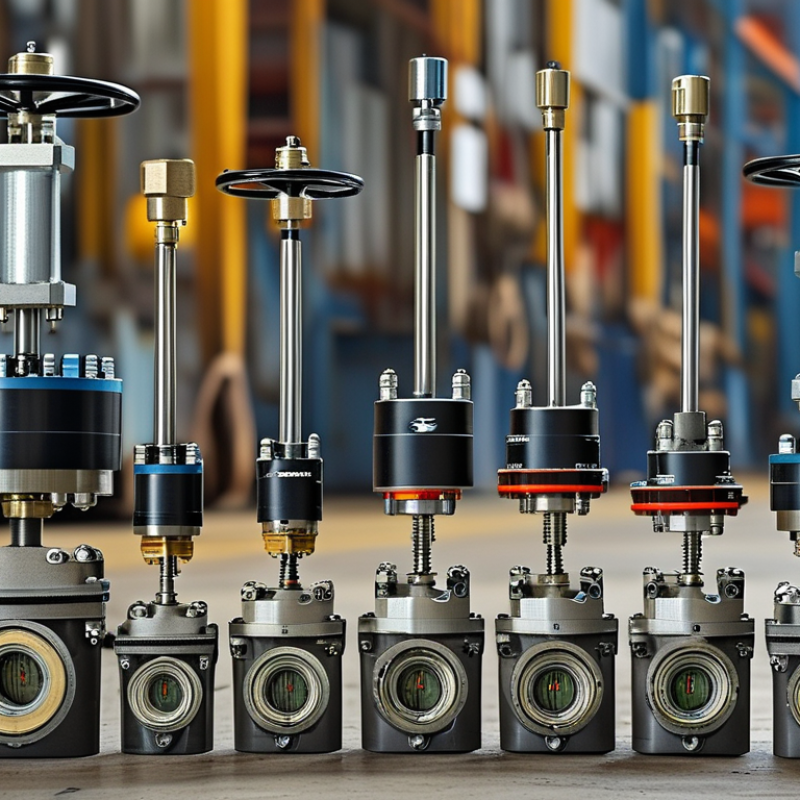
10 Best Electro-Hydraulic Valves for Global Buyers

What Electro-Hydraulic Valves Are and How They Work

Electro-hydraulic valves combine electronic control with hydraulic force. A controller sends a voltage or current signal to a solenoid, proportional actuator, or servo mechanism. The actuator shifts a spool, changes an orifice, or adjusts pressure. Pressurized oil then moves a cylinder or motor with controlled speed and force. Small signals can command powerful movement.

A basic directional valve routes oil between the pump, actuator, and tank. A pressure valve limits unsafe peaks, while a flow-control valve regulates actuator speed. In a factory, this may mean a gripper closes gently, then holds firmly. The response depends on oil viscosity, contamination, temperature, wiring, and feedback quality. Clean oil matters greatly.

Grand View Research’s 2023 Hydraulic Equipment Market analysis valued the global market at roughly USD 49 billion in 2022, with continued growth forecast through 2030. MarketsandMarkets has also linked hydraulic equipment demand to automation, mobile machinery, and energy applications. These figures are broad, not valve-specific. They should not replace testing. In field inspections, a valve can meet its catalog rating yet respond poorly after heat exposure or unstable voltage. I would check pressure, flow, hysteresis, leakage, connector protection, and ISO 4413 safety requirements before purchase. Response time alone can mislead. A slower valve may control a heavy load more smoothly.

Key Specifications for Comparing Electro-Hydraulic Valve Performance

Electro-hydraulic valve performance depends on more than maximum pressure. Global buyers should compare rated flow, response time, hysteresis, leakage, and control resolution. A valve rated at 210 bar may perform poorly if its flow capacity is undersized. Check pressure drop at the actual operating flow, not only the catalog rating.

ISO 10770-1 provides test methods for electro-hydraulic proportional valves, including frequency response and hysteresis. These figures help compare control accuracy under consistent conditions. ISO 4406 cleanliness codes also matter because contaminated oil can increase spool friction and response errors.

The U.S. Department of Energy’s Industrial Decarbonization Roadmap identifies motor-driven systems as consuming more than 20% of industrial electricity in the United States. Therefore, buyers should review coil power, standby consumption, and heat generation. A cooler valve often lasts longer. Still, efficiency comparisons are not always perfectly comparable because test pressures differ.

Tips: Request flow-versus-pressure curves, not isolated ratings. Confirm response time at the intended oil temperature. Ask for leakage limits after endurance testing. I would also check duty cycle carefully; continuous operation can expose weaknesses hidden during short demonstrations. Market research from MarketsandMarkets in 2024 indicates continued growth in electro-hydraulic control demand, but projected market figures should not replace application testing. A practical bench test remains valuable.

Ten Leading Electro-Hydraulic Valves for International Buyers

For international buyers, the ten leading electro-hydraulic valves should be judged by application, not appearance. A compact 24-volt proportional valve may suit mobile equipment, while a high-pressure servo valve fits testing rigs or precision presses. Check rated pressure, flow range, response time, leakage, coil protection, and fluid compatibility. A valve that performs well at 210 bar may struggle with contaminated oil.

Market evidence supports careful selection. Allied Market Research valued the global electro-hydraulic servo valve market at approximately USD 1.4 billion in 2021. Its report forecasts about USD 2.4 billion by 2031, representing a 5.4% compound annual growth rate. MarketsandMarkets also identifies automation, construction equipment, and industrial machinery as major demand areas. These figures indicate opportunity, but they do not guarantee equal quality across suppliers.

Use ISO 4413 guidance when reviewing hydraulic safety and system design. Request factory test records, pressure-cycle results, response curves, and traceable material certificates. Ask whether testing used clean oil at the stated viscosity. Small details matter. A 10-millisecond response claim may reflect ideal laboratory conditions, not a dusty workshop. Buyers should also compare spare-part access, regional service, warranty terms, and documentation language. I would not rank a valve highly without field data; catalog promises are useful, but incomplete.

Application-Based Selection for Industrial and Mobile Equipment

10 Best Electro-Hydraulic Valves for Global Buyers

Application-Based Selection for Industrial and Mobile Equipment

Choosing among ten electro-hydraulic valve types starts with the machine, not the catalogue. Servo valves suit high-precision testing and motion control. Proportional directional valves fit excavators, presses, and injection equipment. Pressure-control valves protect circuits under changing loads. Flow-control valves help regulate cylinders, conveyors, and lifting platforms. Cartridge valves provide compact, high-flow solutions inside integrated manifolds. Mobile load-sensing valves can reduce wasted pump output during variable work cycles. Safety valves, pilot-operated valves, compact block valves, high-response valves, and corrosion-resistant options complete a practical shortlist.

Energy matters. The International Energy Agency reports that motor-driven systems consume about 40% of global electricity. Hydraulic power units add losses through throttling, leakage, and unnecessary standby pressure. Therefore, compare pressure drop, response time, contamination tolerance, duty cycle, and control resolution. A valve rated for 350 bar may perform poorly if oil cleanliness is neglected. Field experience shows that installation space and service access often matter more than peak specifications. That is easy to underestimate.

Tips: Match the valve to the actuator’s real speed and load profile. Check ISO 4413 requirements, fluid compatibility, ambient temperature, and electrical standards before purchase. Ask for verified flow curves, not only nominal ratings. Test response under cold-start conditions. I would also challenge the “best” label: a fast servo valve can be wasteful on a slow lifting circuit, while a simple proportional valve may deliver better value. The wrong decision often looks acceptable during factory testing. It fails after dust, vibration, and long operating hours.

10 Best Electro-Hydraulic Valves for Global Buyers - Application-Based Selection for Industrial and Mobile Equipment

Rank Valve Type Best-Fit Application Typical Nominal Size Typical Pressure Range Typical Flow Range Control Signal Feedback Option Response Characteristic Mounting Standard Key Selection Advantage
1 Proportional Directional Valve Mobile machinery, compact loaders, agricultural equipment and auxiliary functions NG6 / NG10; 1/4 to 3/8 in ports Up to 250–315 bar 10–120 L/min 0–10 V, ±10 V or 4–20 mA Spool position sensor optional Moderate; adjustable ramp and deadband ISO 4401 subplate Balances cost, controllability and compact packaging
2 Servo Directional Valve Test rigs, machine tools, aerospace actuation and precision motion systems NG6 / NG10; 1/4 to 3/4 in ports Up to 210–350 bar 5–160 L/min ±10 V or ±20 mA Integrated LVDT or spool position feedback Very fast; high repeatability ISO 4401 / CETOP interface Best choice for closed-loop precision and dynamic response
3 Electro-Hydraulic Pressure-Reducing Valve Clamping circuits, pilot controls, braking systems and pressure-sensitive actuators NG6 / NG10; 1/4 to 1/2 in ports Inlet up to 315 bar; outlet typically 5–250 bar Up to 80 L/min 0–10 V or 4–20 mA Pressure transducer recommended for closed loop Smooth pressure adjustment ISO 4401 subplate or cartridge cavity Provides electronically adjustable downstream pressure
4 Electro-Hydraulic Proportional Relief Valve Load control, hydraulic power units, injection equipment and mobile load-sensing systems NG6 / NG10; 1/4 to 1 in ports Up to 250–420 bar 10–250 L/min 0–10 V, 4–20 mA or PWM Pressure feedback available Fast pressure limiting with adjustable ramp Subplate, sandwich or cartridge mounting Allows remote pressure control while retaining overload protection
5 Electro-Hydraulic Proportional Flow-Control Valve Actuator speed regulation, conveyor drives and synchronized industrial machinery NG6 / NG10; 1/4 to 1 in ports Up to 250–315 bar 0.5–160 L/min 0–10 V, ±10 V or PWM Optional flow or spool feedback Stable metering; compensation may be required ISO 4401 or inline installation Useful when variable actuator speed is the primary requirement
6 Electro-Hydraulic Check Valve Load holding, vertical cylinders, hydraulic clamps and safety-related blocking circuits Cartridge or NG6 / NG10 Up to 250–350 bar 5–200 L/min 12/24 V DC solenoid or proportional pilot Position switch optional Rapid shutoff; pilot ratio affects release behavior Cartridge cavity or ISO 4401 subplate Protects against unintended actuator movement and drift
7 Electro-Hydraulic Cartridge Valve Compact manifolds, battery-powered equipment and integrated mobile hydraulic systems 8–40 mm cavity sizes Up to 210–350 bar 2–250 L/min 12/24 V DC, PWM or proportional current Optional position or pressure sensing Depends on poppet or spool design Standardized cartridge cavity Minimizes manifold size, hose length and leakage points
8 Electro-Hydraulic Servo Proportional Valve Robotics, forming presses, precision injection systems and multi-axis motion control NG10 / NG16 / NG25 Up to 250–315 bar 40–600 L/min ±10 V, ±20 mA or fieldbus amplifier input Integrated spool position feedback High bandwidth and low hysteresis ISO 4401 / ISO 10372 interface Combines high flow capacity with closed-loop accuracy
9 Electro-Hydraulic Proportional Throttle Valve Fan drives, cooling circuits, auxiliary functions and energy-efficient flow adjustment NG6 / NG10; 1/4 to 1 in ports Up to 210–315 bar 1–200 L/min PWM, 0–10 V or 4–20 mA Flow sensor optional Smooth metering; pressure-drop dependent Inline, sandwich or cartridge mounting Simple and economical variable-flow control for moderate precision
10 Electro-Hydraulic Logic Valve High-flow sequencing, unloading circuits, regenerative functions and industrial power units 16–50 mm cartridge sizes Up to 250–420 bar 50–1,000 L/min On/off solenoid pilot or proportional pilot control Pressure or position feedback optional Fast switching with very low pressure loss when open Manifold cartridge cavity Ideal for large flow paths and compact high-capacity manifolds

Note: Pressure, flow and response values are typical engineering ranges for commonly available industrial and mobile hydraulic configurations. Final selection should verify fluid cleanliness, viscosity, temperature, leakage limits, electrical supply, duty cycle and applicable safety requirements.

Global Purchasing Factors: Quality, Compliance, Cost, and Support

10 Best Electro-Hydraulic Valves for Global Buyers

Quality begins with traceable evidence, not a polished catalogue.

The ISO Survey 2022 recorded 1,265,216 ISO 9001 certificates worldwide. Buyers should still request material certificates, pressure-test records, and batch numbers. Each valve should match the specified flow rate, pressure range, response time, and fluid compatibility. Ask for samples before approving volume orders. One overlooked seal can stop a production line.

Compliance varies by destination. Require conformity documents, risk assessments, and test reports aligned with ISO 4413 and applicable machinery safety requirements. For European projects, review the Machinery Regulation (EU) 2023/1230 and its implementation timeline. Confirm electrical connectors, electromagnetic compatibility, and labeling before shipment. Paperwork matters.

Cost needs a wider lens.

Compare purchase price, energy use, filtration requirements, spare kits, downtime risk, and technician travel. A low quote can still be a costly mistake. The World Bank’s 2023 Logistics Performance Index evaluated 139 economies, showing that customs and delivery performance differ sharply by market. Build buffer stock where logistics are uncertain.

Support should include remote commissioning, multilingual manuals, response-time commitments, and local repair access. I would not trust a supplier promising universal support without named engineers, documented escalation steps, and realistic spare-part lead times. Industry data helps, but factory conditions remain imperfect. Validate performance under actual temperature, contamination, and duty-cycle conditions.

Scroll to Top