Why Invest in CNC Machine Tools for Your Manufacturing Needs?
In today's competitive manufacturing landscape, investing in CNC machine tools is crucial for success. These advanced machines offer precision, efficiency, and flexibility. They are invaluable in optimizing production processes. Manufacturers can achieve tighter tolerances and reduce waste with CNC technology.
However, the transition to CNC machine tools can be daunting. Companies must consider costs, training, and maintenance. Understanding these tools requires expertise. Knowledgeable staff is essential to operate and troubleshoot CNC machines effectively.
While CNC machine tools enhance productivity, the initial investment can be high. Companies must weigh these costs against potential gains. It is important to reflect on the long-term benefits of efficiency and quality. With careful planning, investing in CNC machine tools can transform your manufacturing capabilities and elevate your business to new heights.
Understanding the Basics of CNC Machine Tools in Manufacturing
CNC machine tools have become essential in modern manufacturing. These tools automate the process of creating parts and components. Using Computer Numerical Control (CNC), machines operate with high precision. This leads to improved productivity and consistency in production. Each tool can create complex shapes that manual methods struggle to achieve.
Understanding the basics of CNC machinery is crucial. Typically, these machines use CAD software to transform digital designs into physical parts. The programming involves specifying movements and operations. Initial setup can be challenging, requiring skilled operators. However, the efficiency gained is often worth the learning curve. Regular maintenance and calibration are necessary to maintain accuracy.
Investing in CNC tools offers flexibility. They can be used for various materials, from metals to plastics. Yet, some limitations do exist. The initial costs can be high, and training is required for staff. An assessment of your manufacturing needs will guide the decision. Embracing CNC technology may require some initial hurdles, but the returns often outweigh the challenges.
Advantages of CNC Machine Tools Over Traditional Machining Methods
CNC machine tools bring significant advantages over traditional machining methods. One of the main benefits is precision. CNC machines can produce parts with tight tolerances. They reduce human error, which is common in manual machining. This level of accuracy can enhance product quality and customer satisfaction.
Another key advantage is efficiency. CNC machines can operate continuously without fatigue. They can also execute complex tasks that would take significantly longer by hand. This leads to shorter production cycles. Manufacturers can increase output while maintaining quality. Skilled operators can focus on monitoring processes rather than performing repetitive tasks.
However, transitioning to CNC machinery requires an upfront investment. Not all shops have the budget for such technology. Training existing staff is also a challenge. Workers must adapt to this advanced technology. There’s a learning curve that can slow down operations initially. But, the long-term benefits often outweigh these initial hurdles. Adopting CNC technology can position manufacturers for future growth.
Why Invest in CNC Machine Tools for Your Manufacturing Needs?
| Advantage |
CNC Machine Tools |
Traditional Machining Methods |
| Precision |
High precision with tolerance levels within 0.01 mm |
Lower precision, typically around 0.1 mm |
| Automation |
Allows for unattended operation, reducing labor costs |
Requires continuous human supervision |
| Complexity |
Can handle complex geometries easily |
Limited to simpler designs |
| Setup Time |
Minimal setup time due to programmable features |
Longer setup times with tooling adjustments |
| Material Waste |
Reduced material waste through precision cuts |
Higher material waste due to less precise methods |
Key Features to Consider When Investing in CNC Machine Tools
When considering an investment in CNC machine tools, several key features stand out. Precision is paramount. According to the National Institute of Standards and Technology, CNC machines can achieve tolerances between ±0.001 inches. This level of accuracy is crucial for industries like aerospace and medical, where even minor deviations can result in significant failures.
Speed and efficiency are also critical. A report by Deloitte indicates that 80% of manufacturers see enhanced productivity with CNC technology. Machines capable of high feed rates can produce parts faster. Moreover, the automation capabilities of CNC machines reduce manual labor, lowering the risk of human error and operational costs.
Integration and scalability are important factors as well. Many companies may start small, but as demand grows, they need machines that can be easily upgraded or expanded. Aging equipment can become a liability. Thus, assessing the future scalability of CNC tools is vital. A thorough cost-benefit analysis can reveal whether a CNC machine will keep pace with your business needs over time. Balancing these considerations with the initial investment can be challenging. Reflecting on this balance is essential for making a wise choice.
Benefits of Investing in CNC Machine Tools
Investing in CNC machine tools brings various advantages to manufacturing processes. The chart above illustrates the importance level of key features such as Precision, Efficiency, Scalability, Flexibility, and Cost-effectiveness when considering CNC machinery investments.
The Role of CNC Machine Tools in Enhancing Production Efficiency
CNC machine tools are crucial for modern manufacturing. They automate processes that were once labor-intensive. Precision is their strength, leading to better product quality. With CNC, manufacturers can produce complex parts consistently. This efficiency reduces waste and minimizes production costs.
Implementing CNC technology is not without challenges. Initial costs can be high. Training staff to operate these machines takes time and resources. Yet, the long-term benefits often outweigh these hurdles. Improved efficiency can lead to higher output and profitability. Adopting CNC tools can strengthen a company's competitive edge in the market.
Embracing CNC machine tools requires a shift in mindset. Manufacturers must adapt to new processes and technologies. Continuous improvement is essential. Regularly assessing performance and seeking feedback helps optimize production. This ongoing reflection can drive innovation and efficiency, ensuring that businesses remain relevant in a rapidly evolving industry.
Future Trends in CNC Technology and Their Impact on Manufacturing
The future of CNC technology is bright, with significant advancements shaping the manufacturing industry. Reports indicate that the global CNC machine tools market is projected to reach $100 billion by 2024, driven by innovations in automation and artificial intelligence. These trends emphasize quality, efficiency, and reduced operational costs, making CNC machines essential for competitive businesses.
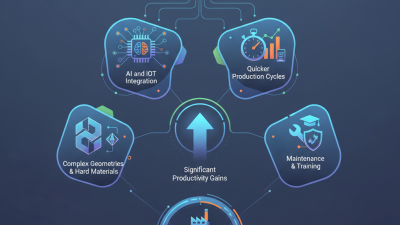
CNC technology is evolving with features like IoT integration and predictive maintenance. Companies that invest in state-of-the-art machinery can gather real-time data from their equipment. This data is invaluable for optimizing workflows and minimizing downtime. Adopting these technologies can lead to a 30% increase in productivity, as noted in various industry analyses. However, not all manufacturers are ready for this shift. Many struggle with the upfront costs and workforce training necessary to implement these new systems effectively.
Understanding these trends can guide investment decisions. Investing in CNC machine tools enhances operational efficiency. Consider starting with a pilot program. This approach allows businesses to assess technology impacts before full-scale adoption. Being cautious yet proactive can lead to substantial long-term benefits. Remember, the key to thriving in manufacturing is embracing change while assessing risks and resource needs.