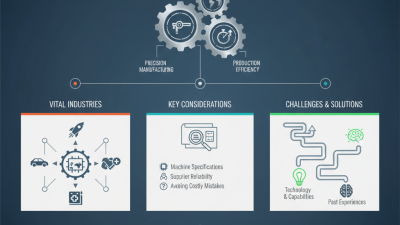
Choosing the best cnc turning machine from China requires more than comparing prices and glossy specifications. The right decision begins with your actual production needs. Consider material type, bar diameter, part length, tolerance, batch size, and expected spindle hours. A stainless-steel shaft may demand different power from an aluminum fitting. A small workshop also needs different automation from an automotive supplier.
CNC manufacturing specialist Mike Lynch offers a useful warning: “Choose the machine that fits your process, not the machine with the longest feature list.” That idea should guide every supplier conversation. Check spindle speed, motor torque, chuck size, turret stations, axis travel, control system, and chip management. Then ask for test-cut evidence using your drawings or similar materials. Numbers alone can mislead. A machine rated for high speed may lose stability during heavy turning. Sometimes, the cheaper option becomes expensive after installation.
Reliable purchasing also depends on the manufacturer’s experience and support system. Review factory history, quality records, inspection equipment, export experience, and customer references. Confirm whether technicians can support installation, training, spare parts, and remote troubleshooting. Request clear documents for accuracy testing, electrical safety, warranty coverage, and delivery terms. Independent inspection is worth considering before shipment. No checklist is perfect. I have seen buyers focus heavily on price and overlook service response time. That mistake can stop a production line for days. This guide examines practical selection criteria, supplier verification, technical risks, and long-term operating value. Its goal is simple: help you choose a cnc turning machine that performs reliably in real production.
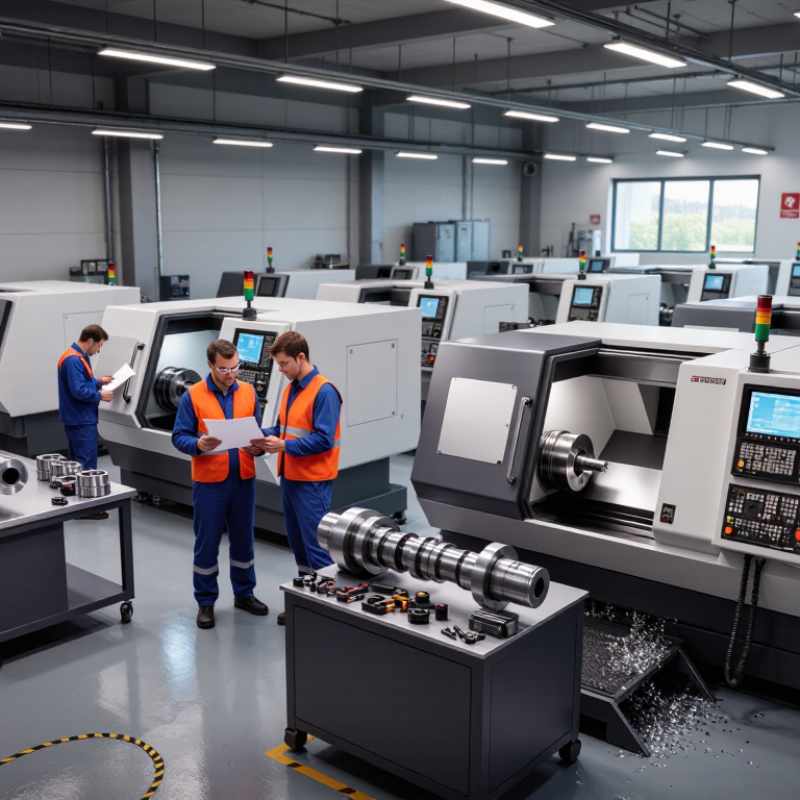
Choosing a CNC turning machine from China starts with production facts, not attractive specifications. Define the material, maximum diameter, turning length, tolerance, surface finish, batch size, and monthly output. A steel shaft measuring 50 mm by 300 mm needs different capacity from small brass fittings. Record the largest workpiece, not the average one. Allow space for chuck jaws, tools, and safe chip removal.
Grand View Research estimates the global CNC machine tools market at about USD 83.8 billion in 2023, with continued growth through 2030. This reflects rising automation demand, but it does not mean every factory needs a high-end machine. The International Federation of Robotics reported 541,302 industrial robots installed worldwide in 2023. For repetitive turning, that trend supports bar feeders, parts catchers, and robotic loading. Still, automation only pays when cycle times and batch volumes justify it.
Consider spindle speed, motor power, turret capacity, guideway design, coolant delivery, and probing accuracy. Ask the supplier for sample parts, inspection records, and a measured cycle-time video. Request tolerance results from your actual material. A brochure is not proof. A spreadsheet can still lie. I have seen buyers overestimate future demand and purchase unnecessary capacity. Calculate hourly cost, tooling use, energy, maintenance, training, shipping, and installation. Leave a realistic allowance for setup errors and production interruptions. The best machine is the one matching your repeatable process, not the longest specification sheet.
Define your CNC turning requirements and production goals before comparing machine specifications.
These practical planning targets help buyers evaluate CNC turning machines against production needs. High first-pass yield and machine utilization indicate process stability, while shorter setup time and lower scrap support flexible, cost-efficient production.
Choosing a CNC turning machine starts with the workpiece, not the catalogue photo. A flat-bed machine suits general shafts, bushings, and repair work. A slant-bed model often handles production cutting with better chip flow. Swiss-type machines fit small, long parts requiring steady support. Turn-mill machines reduce handling when drilling and milling occur on the same component. I once selected a larger machine for future orders, but its idle capacity increased operating costs.
Compare specifications against your actual drawings. Check maximum turning diameter, swing over bed, turning length, spindle bore, chuck size, and motor power. Spindle speed matters, but torque at low speed can matter more for steel parts.
Review axis travel, rapid-feed rate, positioning accuracy, and repeatability separately. Ask for inspection records, test-cut videos, and sample measurements.
A polished video proves little without dimensional evidence.
The control system affects daily productivity. Confirm G-code compatibility, conversational programming, simulation, tool-offset management, and alarm history. Check whether operators can read the interface easily and receive practical training.
Servo response and encoder feedback influence surface consistency during repeated cycles. Remote diagnostics may shorten downtime, but stable local support remains essential.
Request the exact controller configuration, electrical standards, spare-parts list, and software limitations in writing.
Do not ignore coolant filtration and chip removal. Small details become expensive.
I still prefer a slightly slower machine with clear documentation over a faster model that operators cannot confidently maintain.
Choosing the best CNC turning machine from China starts with examining the manufacturer, not the brochure. Ask for production records, inspection procedures, and recent customer references. During a video or on-site visit, inspect calibration documents, assembly cleanliness, and test cuts. A polished showroom proves little. Request a sample part made from your material, with measured tolerances and surface finish. Keep drawings, inspection reports, and revision numbers together.
Quality should connect directly to recognized standards and measurable results. Review ISO 9001 procedures, ISO 230 machine-tool tests, and applicable safety requirements for your market. Confirm who performs calibration and whether equipment has traceable records. A certificate alone is not enough. Ask for spindle runout, positioning accuracy, repeatability, and thermal stability data. Check performance under realistic cutting loads, not only during an empty demonstration. I once treated paperwork as proof of quality; that assumption needs more caution.
Support often determines the real cost of ownership. Evaluate response times, remote diagnostics, operator training, spare-parts availability, and installation guidance. Put these services, warranty limits, and escalation contacts into the purchase agreement. Test support before ordering by sending detailed technical questions. Their answers reveal practical expertise. A practical lesson is that the cheapest machine may create expensive downtime. No checklist predicts every failure. Recheck critical assumptions with your operators before approval.
Practical supplier-assessment matrix for comparing Chinese CNC turning machine manufacturers without relying on company or brand names.
| Assessment Dimension | Recommended Buyer Benchmark | Evidence to Request from the Manufacturer | Relevant Standard or Verification Method | Suggested Weight | Positive Decision Signal |
|---|---|---|---|---|---|
| Machine Structure and Rigidity | The machine should demonstrate stable cutting performance for the intended material, workpiece diameter, tooling method, and production volume. The bed, guideways, spindle housing, and chip-management design should match the application. | General arrangement drawing, machine weight, bed and guideway specifications, maximum cutting diameter, maximum workpiece length, sample-cut video, and an application-specific test report. | Review the machine design against the supplier’s declared specifications. Confirm performance through a witnessed sample cut using the buyer’s material and tooling. | 15% | Strong Consistent surface finish, chip control, and dimensional stability during the complete test cycle. |
| Positioning Accuracy and Repeatability | Accuracy claims should be stated for the complete machine configuration and measured under defined environmental and operating conditions. Repeatability is especially important for unattended or high-volume production. | Recent inspection report showing axis positioning accuracy and repeatability, measurement conditions, machine warm-up procedure, and the serial number of the tested machine. | ISO 230-2 is commonly used for testing the accuracy and repeatability of numerically controlled machine-tool axes. Require the actual test method and results rather than an unsourced brochure value. | 15% | Strong Traceable measurement results are supplied and the witnessed test meets the agreed acceptance limits. |
| Thermal Stability | The machine should control dimensional drift during spindle warm-up, long production cycles, and changes in ambient temperature. Thermal performance must be judged against the buyer’s tolerance requirements. | Warm-up procedure, spindle operating range, coolant-temperature control details, thermal compensation functions, and dimensional results from a continuous machining test. | ISO 230-3 provides methods for evaluating thermal effects on machine tools. A practical factory acceptance test should include measurements before and after a representative operating cycle. | 10% | Strong Dimensional change is measured, documented, and remains within the agreed production tolerance. |
| Spindle and Drive System | Spindle speed, torque, power, bearing arrangement, acceleration, and duty cycle should support the buyer’s materials and cutting strategy. Continuous-duty capability should be distinguished from short-term peak ratings. | Spindle torque-power curve, rated and maximum speed, runout measurement, bearing information, motor duty rating, overload protection, and a cutting test using the target material. | Verify the supplier’s published operating data through a functional test. Measure runout with calibrated equipment and confirm that the test tooling and workholding match the intended application. | 10% | Strong Torque and power data are supplied across the working speed range, with no unexplained vibration or overheating. |
| Turret, Tooling, and Workholding | The turret indexing time, tool capacity, live-tool capability, chuck or collet system, bar capacity, and hydraulic or pneumatic requirements should fit the planned part family. | Turret layout, station specifications, indexing test, toolholder compatibility, chuck or collet documentation, bar-feeder interface details, and sample cycle-time calculation. | Confirm interfaces, tooling dimensions, and safety functions against the buyer’s drawings and process plan. Require a complete accessory list so that essential items are not excluded from the quotation. | 8% | Strong All tools, holders, workholding devices, and interfaces are clearly defined and included in the commercial offer. |
| Control System and Connectivity | The control system should provide the required turning cycles, tool compensation, program transfer, alarm history, data backup, and integration capability. Cybersecurity and remote-access permissions should be controlled by the buyer. | Control-system function list, supported file formats, program backup procedure, network requirements, remote-support policy, user-access levels, and training materials. | Test all required functions with the buyer’s programs before shipment. Review machine-network controls and confirm that remote access is enabled only with written authorization. | 8% | Strong The buyer’s programs run correctly, backups are documented, and remote support has defined access controls. |
| Quality Management System | The manufacturer should operate a documented quality system covering incoming materials, process inspection, calibration, assembly checks, final testing, nonconformity control, and corrective action. | Valid quality-management certificate, certificate scope and validity, internal inspection records, calibration certificates, nonconformity procedure, and final inspection checklist. | ISO 9001:2015 defines requirements for a quality-management system. Verify the certificate through the issuing or accreditation-related source and ensure the scope covers machine manufacturing. | 10% | Strong Records are traceable to the machine, measuring equipment is calibrated, and corrective actions are documented. |
| Safety and Regulatory Compliance | The machine should include guarding, interlocks, emergency stops, electrical protection, safe maintenance access, clear manuals, and risk-reduction measures appropriate to the destination market. | Risk assessment, electrical diagrams, safety-circuit description, guard and interlock test records, declaration or conformity documentation where applicable, and operating and maintenance manuals. | ISO 12100 addresses machinery risk assessment and risk reduction. ISO 16090-1 covers safety requirements for machining centres and milling machines; the applicable requirements should be confirmed for the specific turning-machine configuration and destination country. | 8% | Strong Safety functions are tested during factory acceptance, and destination-market documentation is complete. |
| Factory Acceptance Testing | Payment release and shipment should be linked to a written acceptance protocol covering geometry, axis accuracy, spindle operation, machining results, alarms, accessories, documentation, and packaging. | Signed FAT protocol, inspection instruments used, measurement results, test-part drawings, photographs or video, open-issue list, and agreed corrective-action deadline. | Use ISO 230 test methods where applicable and supplement them with buyer-defined part acceptance criteria. A factory test does not replace final installation and site acceptance. | 8% | Strong Acceptance criteria are measurable, witnessed, signed, and connected to contractual remedies. |
| After-Sales Support and Spare Parts | Support should cover installation, commissioning, operator training, troubleshooting, software backup, preventive maintenance, and spare-parts availability for the expected service life. | Service-level agreement, response-time commitments, escalation contacts, spare-parts list, recommended stock, exploded diagrams, troubleshooting guide, training plan, and warranty terms. | Evaluate support using measurable contractual terms: response time, remote-diagnosis process, on-site service conditions, warranty exclusions, parts lead-time targets, and language availability. | 8% | Strong Support obligations, spare-parts responsibilities, and escalation procedures are written into the purchase contract. |
Scoring method: assign each dimension a score from 0 to 5, multiply it by the suggested weight, and compare the weighted totals. Do not approve a supplier solely on price; treat failed safety tests, missing traceability, or unsuccessful acceptance tests as critical issues regardless of the total score.
When choosing a CNC turning machine from China, compare ownership cost, not only the purchase price. Include shipping, import duties, installation, training, tooling, software, coolant, energy, and spare parts. A 2024 Deloitte Global Smart Manufacturing Survey found that 86% of manufacturers view smart manufacturing as a major competitiveness driver within three years. This supports investing in reliable controls and useful connectivity. However, advanced features are wasted if your operators cannot use them.
Request a detailed quotation with cycle-time tests, spindle power, positioning accuracy, warranty coverage, and delivery terms. Ask for real maintenance records from comparable machines. Customization may include chuck size, bar feeder integration, probing, automation interfaces, and special software. Each option should solve a measured production problem. Otherwise, customization becomes expensive decoration. A cheaper machine can create hidden costs through longer setup times, rejected parts, and delayed service.
Tips:
Calculate cost per acceptable part over five years. Compare at least three suppliers using identical specifications. Confirm electrical standards and factory acceptance testing. Keep critical spare parts locally. Review the service response time in writing.
The 2023 U.S. Department of Energy industrial efficiency guidance emphasizes that motors and compressed-air systems can create significant operating costs. Therefore, check motor efficiency, standby power, and air consumption before ordering. My judgment may be imperfect: buyers sometimes overvalue precision figures and undervalue service access. A slightly higher quote may be safer when documentation, training, and replacement parts are clear.
Choosing a CNC turning machine from China requires evidence, not attractive specifications. Ask for a factory acceptance test using your actual material, diameter, tolerance, and cycle time. ISO 230-2:2014 provides a recognized method for checking positioning accuracy and repeatability. Request the complete test record, including temperature conditions and measurement equipment. A glossy video is not enough.
Delivery terms deserve the same attention. The ICC Incoterms 2020 rules define responsibility for freight, insurance, customs, and risk transfer. Write these details into the contract. Confirm packing dimensions, port information, spare-parts lists, and the latest shipment date. The UNCTAD Review of Maritime Transport 2024 shows how shipping disruptions can affect schedules and costs. A promised date without a delay procedure is weak protection.
Installation should include leveling, electrical checks, trial machining, operator training, and documented acceptance criteria. Ask who pays for travel, accommodation, and replacement parts. After-sales support should state response times, remote diagnosis methods, warranty exclusions, and service-part availability. The Deloitte 2024 Global Smart Manufacturing Survey reports that 86% of manufacturers view smart manufacturing as important for future competitiveness. Connectivity matters, but unstable support can cancel its value. I would not accept vague promises. Even a careful buyer can miss a small detail, such as voltage compatibility or local coolant requirements. Check twice. A signed checklist reduces expensive arguments later.