How to Choose a 2 Door Electric Truck Globally?
Choosing a 2 Door Electric Truck for global use requires more than comparing battery size and showroom prices. Buyers should examine payload, cargo dimensions, driving range, charging access, and local road conditions. A compact truck may suit crowded city streets, yet struggle on steep rural routes with a full load. Measure the work first.
Real-world experience often reveals details missed in brochures. Check how the truck performs during hot summers, cold mornings, heavy rain, and repeated stop-start deliveries. Ask for verified range data, battery warranty terms, charging times, and service records. A test drive should include tight turns, uneven roads, braking, and loading. Small details matter.
Not every market has reliable fast chargers. That assumption can fail.
Global selection also involves steering position, vehicle dimensions, safety equipment, import requirements, and approved charging standards. Confirm that the model meets the safety and emissions rules of its target country through official documentation. Independent crash evaluations and recognized certification bodies can provide stronger evidence than promotional claims. Local technicians, spare-parts availability, and software support deserve equal attention.
Cost should include electricity, insurance, maintenance, tires, financing, and battery replacement risk. A lower purchase price may become expensive when parts travel across borders. Conversely, a higher-priced model may deliver better uptime and stronger warranty support. The best 2 Door Electric Truck is not simply the one with the longest range. It is the one that matches the payload, climate, infrastructure, driver needs, and business budget. Some decisions will remain uncertain. Review the evidence carefully, and leave room for changing technology.
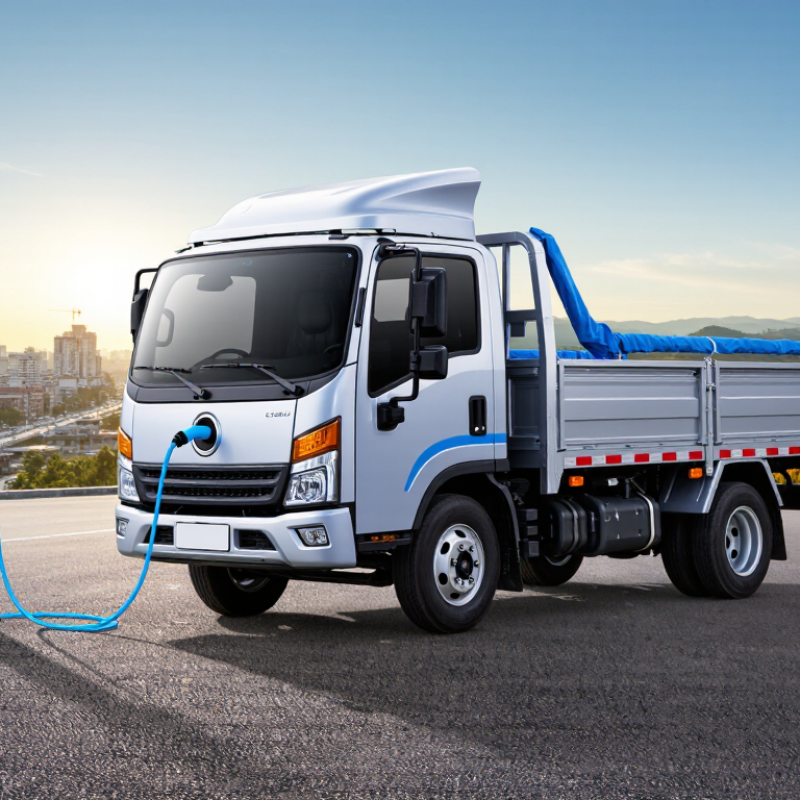
Define Your Cargo, Terrain, and Daily Operating Requirements
How to Choose a 2 Door Electric Truck Globally?
Define Your Cargo, Terrain, and Daily Operating Requirements
Start with the cargo, not the cabin. Measure average payload, package dimensions, loading frequency, and axle distribution. A truck carrying dense tools needs different capacity from one carrying bulky cartons. Measure the real load. Overestimating capacity can raise purchase costs, while underestimating it may shorten battery life and reduce safety margins.
Terrain changes everything. Record daily gradients, road surfaces, traffic density, and seasonal temperatures. A route with steep hills can consume significantly more energy than a flat urban route. The IEA’s Global EV Outlook 2024 reported that electric truck sales grew by about 35% in 2023, showing stronger adoption across varied operating environments. However, market growth does not guarantee suitability for every route. Cold weather, high winds, and repeated stops still require practical testing.
Daily operation should define battery size and charging design. Calculate kilometers per shift, idle time, return-to-base patterns, and available charging hours. The U.S. Department of Energy’s Alternative Fuels Data Center emphasizes that charging duration depends on battery capacity, charger power, and vehicle condition. Do not rely only on advertised range. Field trials often reveal different results. Leave room for weather, payload changes, and battery aging. A smaller battery may work for short urban routes, but poor charging access can quickly make that choice inconvenient.
How to Choose a 2-Door Electric Truck Globally?
Define the cargo, terrain, and daily operating requirements before selecting a vehicle. The chart shows practical minimum payload targets for common global operating profiles.
| Operating Profile | Typical Cargo Volume | Daily Distance | Terrain Demand | Recommended Payload Target |
| Urban delivery | 3–5 m³ | 60–120 km | Mostly paved roads, moderate gradients | 800 kg |
| Rural service | 3–6 m³ | 100–180 km | Unpaved roads, slopes up to about 15% | 1,000 kg |
| Construction and light off-road | 2–4 m³ | 50–100 km | Rough surfaces, slopes up to about 25% | 1,200 kg |
These planning benchmarks are intended for early vehicle selection and do not replace local homologation, axle-load, towing, battery-temperature, or charging requirements. Select payload capacity from the heaviest regular load, then verify that usable battery energy covers the daily route with a reserve for weather, traffic, gradients, and auxiliary equipment.
Calculate Total Ownership Cost and Select the Best-Fit Truck Variant
Choosing a 2 door electric truck globally starts with total ownership cost, not showroom price.
BloombergNEF’s 2024 Battery Price Survey reported an average battery pack price of $115 per kWh, down 20% year on year. This supports falling costs, but fleet buyers still face expensive charging upgrades. Calculate purchase price, financing, insurance, taxes, energy, maintenance, downtime, and battery warranty limits.
Match the truck variant to its real duty cycle. A short-wheelbase model may suit dense urban deliveries, while a longer chassis can carry more equipment. Check payload after adding the battery, tools, passengers, and refrigeration units. Record daily distance, average load, gradients, temperature, and charging access. The IEA Global EV Outlook 2024 notes that electric trucks can achieve lower total ownership costs in high-utilization operations. However, results depend heavily on electricity prices and annual mileage. I would not trust a model based on laboratory range alone.
Tips: Build three cost scenarios. Use low, typical, and high energy prices. Include winter range losses and charger downtime. Compare a depot charger with public charging. Review residual value carefully; it remains difficult to predict. Test the 2 door cabin with actual drivers. A spreadsheet can still be wrong. Industry assumptions deserve regular review.