Best CNC Turning Parts Manufacturer in China?

Choosing the best cnc turning parts manufacturer in China requires more than comparing prices. The right decision depends on proven process control, material knowledge, inspection discipline, and dependable communication. A supplier may show polished photographs, yet photographs cannot reveal tool wear, hidden burrs, or unstable tolerances. Those details appear when parts reach assembly.

W. Edwards Deming, a respected manufacturing quality authority, said, “Quality comes not from inspection, but from the improvement of the production process.” His principle remains practical for CNC turning. Reliable manufacturers control quality before final inspection. They review drawings carefully, confirm material certificates, manage cutting parameters, and measure critical dimensions with calibrated equipment. Look for evidence, not promises. Ask for sample inspection reports, process capabilities, and clear responses about tolerances.

Experience matters here. A capable factory should understand stainless steel, aluminum, brass, engineering plastics, and difficult alloys. It should also explain how chucking methods, insert selection, surface speed, and coolant affect the finished component. Small details matter. A clean thread matters.

The evaluation is not always straightforward. A lower quotation can hide slower communication, inconsistent batches, or expensive rework. A higher price does not automatically guarantee better performance either. This is where buyers need careful questions, realistic samples, and documented acceptance standards. The best cnc turning parts manufacturer is not simply the cheapest supplier. It is the partner that repeatedly delivers accurate parts, honest updates, and traceable results. No supplier is perfect. The strongest ones acknowledge weaknesses and improve them.
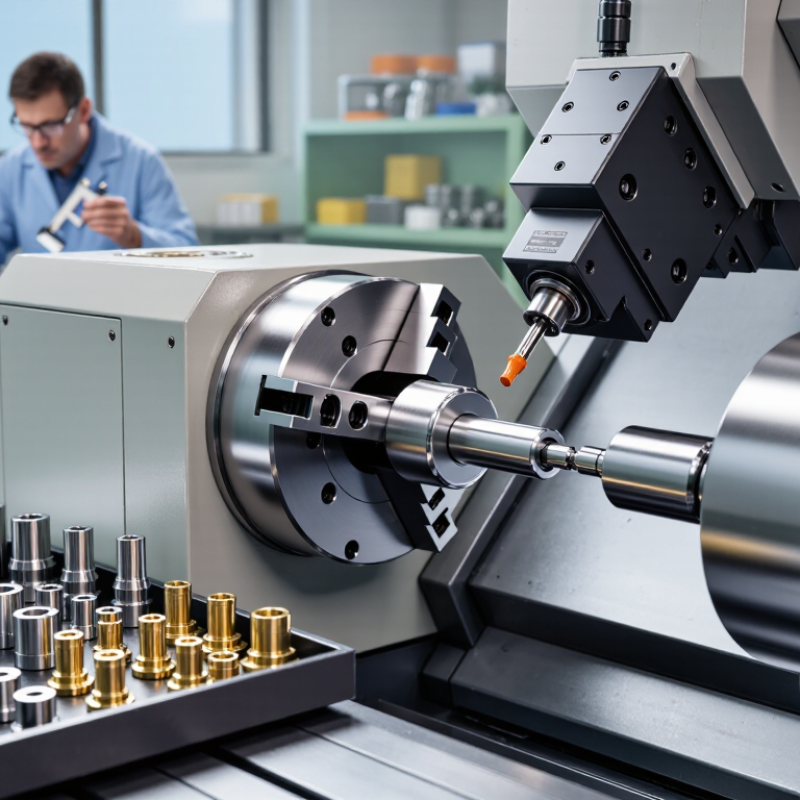
Best CNC Turning Parts Manufacturer in China?

What Defines China’s Best CNC Turning Parts Manufacturer?

What Defines China’s Best CNC Turning Parts Manufacturer?

The best CNC turning parts manufacturer is defined by repeatable results, not attractive promises. In production, engineers inspect the first article, measure critical diameters, and compare results with approved drawings. Skilled machinists understand tool wear, material behavior, and surface finish requirements. They also question unclear dimensions before cutting metal.

A reliable manufacturer uses calibrated inspection equipment and keeps clear production records. Traceability should connect raw material certificates, machine settings, inspection reports, and packed parts. This process helps prevent hidden quality issues. It also makes corrective action faster when a dimension drifts. Strong technical communication matters too. A supplier should explain risks honestly, even when the answer is inconvenient. That builds practical trust.

Tips: Ask for sample inspection reports, tolerance capability data, and material documentation. Check how the factory handles nonconforming parts. Visit the workshop if possible. Look at housekeeping, operator training, and inspection routines. These details reveal more than polished photos.

Experience, however, does not guarantee perfection. Even capable factories can face tool wear, batch variation, or rushed scheduling. The important question is how openly they identify and control those problems. A dependable partner keeps improving its process, rather than pretending every order runs flawlessly. Real expertise appears in stable output, measurable controls, and transparent decisions.

Best CNC Turning Parts Manufacturer in China? What Defines China’s Best CNC Turning Parts Manufacturer?

Dimensional control is a fundamental benchmark for CNC turning quality. The chart shows the maximum permissible general linear tolerance defined by ISO 2768-1 for Fine (f) and Medium (m) tolerance classes. A capable manufacturer should consistently achieve the tolerance class specified on the engineering drawing, supported by calibrated inspection equipment and documented process control.

Reference: ISO 2768-1 general linear tolerances. Values represent tolerance limits in millimetres and are not a ranking of individual suppliers.

CNC Turning Accuracy: ±0.01 mm, IT7–IT8 Grades, and ISO 2768

Best CNC Turning Parts Manufacturer in China?

CNC turning accuracy of ±0.01 mm requires more than a modern machine. It depends on programming, tooling, material stability, and inspection discipline. Experienced manufacturers check bar stock before machining. They also control temperature, vibration, and tool wear during production. A small diameter shift can affect assembly, sealing, or bearing performance.

IT7–IT8 grades indicate controlled dimensional and geometric performance. However, these grades should match the part’s function, not appear only on a quotation. ISO 2768 provides general tolerances when individual dimensions lack specific limits. It does not replace critical tolerances shown on the drawing. Practical suppliers confirm datum references, surface finish, thread requirements, and measurement methods before cutting metal.

Tips: Ask for inspection records, calibration dates, and sample reports. Confirm whether ±0.01 mm applies to every dimension or selected features. Request first-article inspection for complex parts. A capable manufacturer can explain limits clearly. Vague promises deserve caution.

Measurement may include micrometers, gauges, height instruments, and coordinate measuring equipment. Still, inspection results can vary with temperature and operator technique. No process is flawless. I have seen drawings that demanded IT7 precision without defining functional contact surfaces. That requirement looked impressive but created unnecessary cost. Clear engineering communication often improves quality more than tighter tolerances.

Material, Machine Capacity, and Bar Sizes from 6 to 65 mm

Best CNC Turning Parts Manufacturer in China?

Material choice sets the starting point for reliable CNC turning. Stainless steel resists corrosion, aluminum reduces weight, and brass machines smoothly for fittings. For demanding shafts, alloy steel offers strength after heat treatment. Grand View Research valued the global CNC machine market at approximately USD 83.6 billion in 2023, showing how strongly manufacturers invest in precision production. However, market growth does not guarantee good parts. A supplier must verify material certificates, hardness, and actual batch traceability.

Bar sizes from 6 to 65 mm cover small pins, connectors, bushings, and compact shafts. The machine matters. Swiss-type lathes suit slender parts near 6 mm, while larger fixed-head machines handle bars approaching 65 mm. Capacity should include chuck size, spindle bore, maximum turning diameter, and tool stations. The International Federation of Robotics reported 541,302 industrial robots installed worldwide in 2023. Automation can improve repeatability, but it cannot correct poor setup decisions. That detail is easy to overlook.

Ask for measured runout, first-article inspection, and sampling records. Micrometers, air gauges, and optical systems reveal different defects. A supplier may claim tight tolerance, yet tool wear can slowly shift a 30 mm diameter. That is where experience becomes visible. I would also question whether the advertised 65 mm capacity works continuously, not only during a short trial.

Quality Control: ISO 9001, SPC, and Cpk ≥1.33 Performance

Choosing the best CNC turning parts manufacturer in China requires more than comparing prices. Quality must be visible on the shop floor. An ISO 9001 system provides controlled procedures, traceable records, and defined corrective actions. In practice, I look for inspection plans linked to drawings, calibrated micrometers, and operators who understand tolerance zones. A certificate alone is not enough. It can be valid, yet poorly applied.

Statistical Process Control (SPC) shows whether production remains stable during repeated turning operations. Teams should monitor critical dimensions such as diameter, concentricity, thread pitch, and surface roughness. Control charts can reveal tool wear before parts fail inspection. Cpk matters too. A Cpk of at least 1.33 indicates capable performance when data is collected correctly. I expect capability studies based on real production batches, not selected samples. The calculation should include measurement-system checks, stable conditions, and clear reaction rules. Sometimes the first study looks excellent, but later shifts expose poor fixture control. That deserves investigation.

Tips: Ask for recent SPC charts, Cpk reports, calibration records, and sample inspection data. Request the drawing revision used for every report. Visit the process if possible. Watch how tools are changed, chips are cleared, and nonconforming parts are isolated. Small details often tell the truth. One weakness remains: no metric replaces honest communication when a process starts drifting.

How to Compare MOQ, Lead Time, Certifications, and Total Cost

Best CNC Turning Parts Manufacturer in China?

Comparing CNC turning suppliers requires more than checking the lowest quotation. Ask how MOQ affects unit price, material purchasing, and setup charges. A low MOQ may reduce inventory risk, but it can increase machining costs. Request a clear production schedule, including programming, first-article inspection, machining, and packing. Lead time should be based on real capacity, not a hopeful promise. During my supplier reviews, vague dates often created avoidable delays.

Tips: Request a sample order, written MOQ terms, and a weekly production update. Check whether quoted lead time includes inspection and shipping.

Certifications should match your application and market requirements. Confirm certificate numbers, issuing bodies, validity dates, and whether documents cover the actual factory. A certificate copied into a quotation proves very little. Ask for material reports, dimensional inspection records, and process-control evidence. Total cost also includes tooling, surface treatment, packaging, freight, taxes, rework, and possible communication loss. Compare identical drawings and tolerances. Otherwise, the cheapest offer may only appear cheap. I have seen a small tolerance change add several inspection hours. That detail was missed at the beginning.

Best CNC Turning Parts Manufacturer in China? - How to Compare MOQ, Lead Time, Certifications, and Total Cost

Comparison Dimension Typical Market Benchmark What to Request and Verify Effect on Total Cost Evaluation Signal
Minimum Order Quantity (MOQ) Prototypes: 1–10 pieces
Low-volume production: 10–100 pieces
Repetitive production: often 100+ pieces
Confirm whether the MOQ applies per part number, material, finish, or total order. Check setup charges and whether mixed quantities are accepted. A low MOQ may involve a higher unit price because programming, tooling, inspection, and material setup costs are spread across fewer parts. Compare landed cost, not only the quoted unit price.
Prototype Lead Time Normally 3–7 business days after drawing approval and material confirmation for simple turned parts. Request a written schedule covering design review, programming, material purchasing, machining, inspection, and shipping. Expedited machining and shipping can increase the total project cost, especially when material must be sourced urgently. A reliable supplier provides milestone dates rather than one vague delivery date.
Production Lead Time Commonly 10–25 business days for standard materials and moderate quantities after order approval. Verify available machine capacity, material availability, inspection capacity, and the supplier’s holiday or shutdown calendar. Longer lead times may reduce freight expense, while short deadlines can require overtime, premium freight, or reserved capacity. Unclear capacity planning is a significant schedule risk.
Material Traceability Material certificates should identify the alloy or grade, heat or batch number, chemical composition, and mechanical properties. Request a mill test certificate or EN 10204 3.1 certificate when required. Confirm that the certificate batch matches the delivered parts. Full traceability adds administrative and inspection work but can prevent costly recalls and compliance problems. Strong traceability is essential for aerospace, medical, automotive, and safety-critical parts.
Quality Management Certification ISO 9001 is a common general quality-management certification. Request the current certificate, certification scope, issuing body, validity dates, and the address covered by the certificate. A certified quality system may increase the quotation slightly but generally lowers inspection, rework, and supplier-management costs. Verify the certificate directly with the issuing certification body when possible.
Industry-Specific Certifications ISO 13485 may be relevant to medical-device supply chains.
AS9100 may be relevant to aerospace supply chains.
Confirm that the certification applies to the actual manufacturing site and covers the processes required for your parts. Sector-specific controls can increase documentation and inspection costs but may be mandatory for customer or regulatory approval. Do not treat ISO 9001 as a substitute for an industry-specific requirement.
Dimensional Capability Many CNC turning suppliers quote general tolerances around ±0.05 mm; tighter tolerances must be reviewed part by part. Ask for a capability review based on the actual drawing, including tolerance stack-up, surface finish, thread requirements, and concentricity. Tight tolerances, special tooling, additional operations, and 100% inspection can significantly increase machining cost. A supplier should not promise tight tolerances without reviewing geometry and material.
Inspection and Documentation Standard documentation may include a certificate of conformity and inspection report. First-article inspection is common for new parts. Define inspection equipment, sampling method, report format, gauge calibration, and whether first-article or 100% inspection is required. Coordinate measuring machine reports, first-article inspection, and 100% inspection add cost but reduce acceptance and field-failure risk. The inspection plan should be agreed before production begins.
Surface Treatment and Finishing Common options include anodizing, plating, passivation, black oxide, polishing, and deburring. Outside processing may add several business days. Confirm treatment specification, color or appearance standard, thickness, corrosion requirement, masking areas, and subcontractor controls. Finishing cost depends on material, batch size, treatment thickness, masking, cosmetic requirements, and transportation between processes. Unspecified finishes often cause rework, delays, or inconsistent appearance.
Compliance Documentation Depending on the application, buyers may require RoHS, REACH, conflict-minerals, or restricted-substance declarations. Request current declarations and verify that they cover the material, plating, coating, and any purchased components used in the part. Documentation is usually a modest direct cost, while non-compliance can create customs, product-launch, or market-access costs. Compliance requirements should be stated in the purchase order and drawing package.
Shipping and Landed Cost Compare the complete cost: machining, material, tooling, finishing, inspection, packaging, freight, duties, taxes, and payment fees. Request an Incoterms-based quotation and confirm package dimensions, gross weight, shipment method, customs responsibility, and insurance. Freight may be a small part of heavy bulk orders but a significant part of small, urgent, or high-value shipments. The lowest ex-works price is not always the lowest delivered cost.
Payment Terms and Cash Flow Common arrangements include a deposit for new tooling or small orders and balance payment before shipment; terms vary by supplier and buyer history. Confirm deposit percentage, payment milestones, accepted currencies, bank charges, credit terms, and refund treatment for rejected parts. Deposits affect working capital, while unfavorable payment terms can outweigh a small unit-price reduction. Use milestone payments for tooling, first articles, and production where appropriate.
Total Cost of Ownership A practical comparison should include unit price plus setup, tooling, inspection, finishing, packaging, freight, duties, rejects, rework, and inventory carrying cost. Compare at least three equivalent quotations using the same drawing revision, quantity, material grade, finish, inspection plan, delivery term, and currency. Total Cost = Price + Quality Cost + Logistics Cost + Delay Cost + Risk Cost The best supplier is the one that meets requirements at the lowest reliable landed cost.

Note: The ranges shown are indicative purchasing benchmarks for conventional CNC turned parts. Actual MOQ, lead time, certifications, tolerances, and total cost depend on part geometry, material, quantity, finish, inspection requirements, shipping route, and contract terms.

Scroll to Top