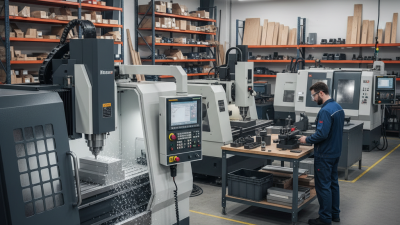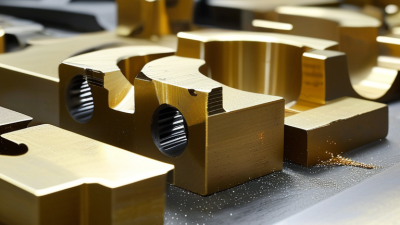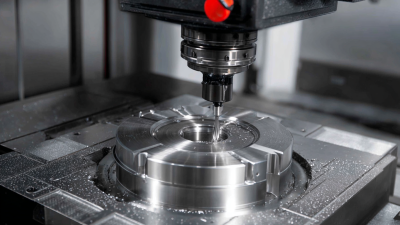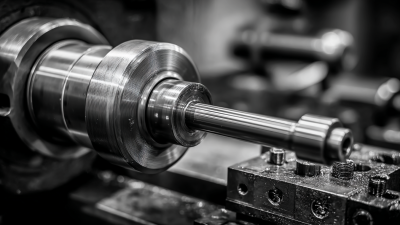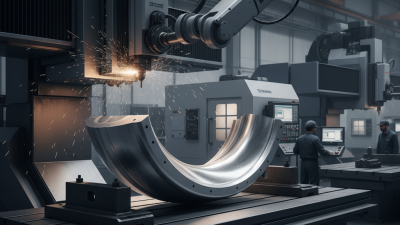
Choosing the best CNC tools from China requires more than comparing prices or browsing polished product photos. The right choice depends on cutting material, machine rigidity, spindle speed, coolant use, and expected tool life. A carbide end mill may perform well in aluminum but struggle in hardened steel. Small details matter.
China has a broad manufacturing base for cnc tools, including drills, milling cutters, inserts, reamers, toolholders, and custom solutions. Experienced buyers usually examine carbide grade, coating type, runout, dimensional tolerance, and edge preparation. They also request inspection reports, sample testing, and clear information about production capabilities. Reputable manufacturers should explain their quality controls instead of making vague performance claims.
Look closely at the supplier’s technical evidence. ISO certification can support credibility, but it does not guarantee that every tool suits your process. Independent testing, trial orders, and consistent batch records provide stronger practical evidence. Packaging also reveals something: protected cutting edges, readable labels, and accurate specifications reduce receiving mistakes. Yet no supplier is perfect. Even a reliable factory may deliver inconsistent results when specifications are unclear or machining conditions change.
This guide compares leading Chinese CNC tool manufacturers and examines their strengths, applications, quality systems, customization options, and after-sales support. It also considers total operating cost, not only the initial purchase price. A cheaper tool that wears quickly can increase downtime and scrap. The best decision is measurable. Test carefully, record results, and choose the supplier that performs consistently in your actual workshop.
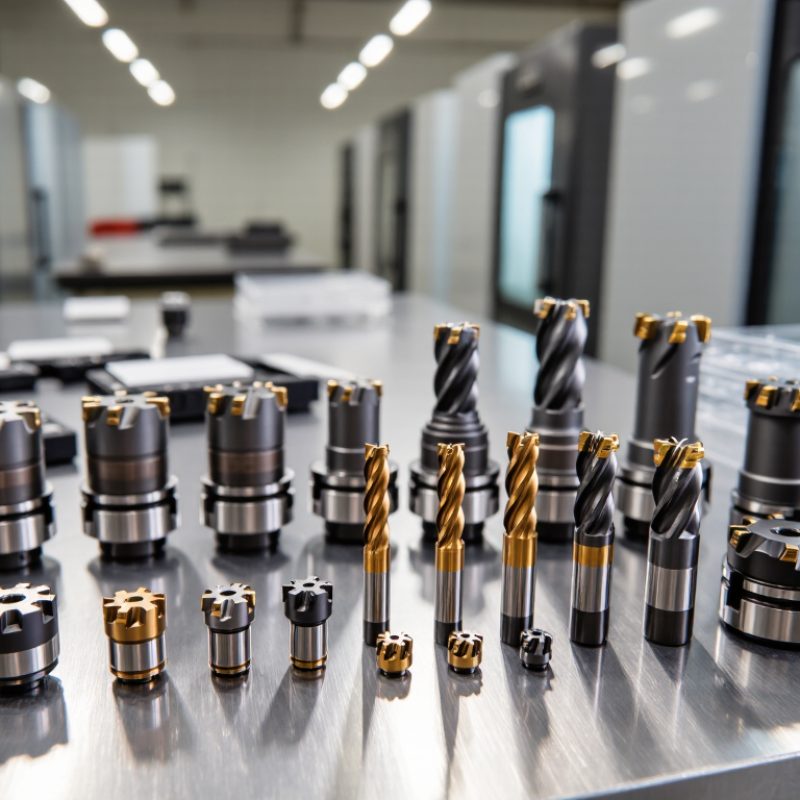
What Are the Best CNC Tools From China? The strongest answer begins with quality control, not price. A high-quality CNC tool should deliver stable cutting, accurate geometry, and predictable tool life. The International Federation of Robotics’ World Robotics 2024 report recorded 276,288 industrial robot installations in China during 2023. This manufacturing scale supports advanced automation and process monitoring. However, scale alone proves nothing.
A reliable tool should have consistent carbide composition, secure coating adhesion, sharp edges, and traceable inspection records. For a 6 mm end mill, suppliers should report diameter tolerance, edge preparation, hardness, and runout under defined conditions. The complete tool-holder assembly matters too. At high spindle speeds, poor balance can create vibration, noise, and uneven wear. Small details become expensive quickly.
Material availability also helps. The U.S. Geological Survey’s Mineral Commodity Summaries 2024 reported about 67,000 metric tons of tungsten production in China in 2023, nearly 86% of global output. This supports a deep carbide supply chain, but it does not guarantee performance. Ask for cutting trials using your alloy, feed rate, and coolant. Request measurable results, not only certificates. ISO paperwork can be useful. It is not enough. A tool may look excellent under a microscope yet fail after twenty minutes in hardened steel. That possibility deserves honest testing, especially when a supplier provides limited batch data.
Choosing the best CNC tools from China starts with the machining task, not the country of origin. For aluminum, polished carbide end mills with two or three flutes evacuate chips quickly. For stainless steel, tougher carbide grades and variable helix geometry reduce vibration. Start with the cut. A coating helps, but the wrong flute design still fails.
CNC TOOL SELECTION
Drills suit fast hole-making, while solid carbide drills deliver better accuracy in hardened or abrasive materials. For repeated production, indexable inserts lower replacement time and control costs. Reamers are better when a hole needs a close finish. Taps require the correct form: spiral-point taps work well in through-holes, while spiral-flute taps lift chips from blind holes. Coolant changes everything. Tool life depends on feed, speed, workholding, and chip evacuation together.
Fortune Business Insights estimated the global cutting-tools market at about 40 billion dollars in 2023, with continued growth through 2030. That expansion reflects stronger demand for precision machining and automation. Grand View Research also identifies carbide tools as a major product segment, supported by their hardness and wear resistance. In practical trials, however, catalog data can look better than workshop results. A low-cost Chinese tool may perform excellently on aluminum but disappoint in interrupted cuts. Buyers should request material certificates, coating details, runout limits, and test-cut records before ordering. Our assumptions deserve checking. A short trial run often reveals more than a long specification sheet.
When comparing CNC tools from China, start with the cutting material, not the price. Carbide suits hardened steel, stainless steel, and continuous production. High-speed steel costs less and works well for softer metals or interrupted cuts. Cermet can produce clean finishes, but it may chip under vibration. Match hardness, toughness, flute geometry, and workpiece material. A tool that performs well on aluminum may fail quickly in cast iron.
Coatings also change tool life and cutting stability. AlTiN or TiAlN coatings usually handle high heat during dry or high-speed machining. DLC can reduce friction when machining aluminum, but it is not ideal for every alloy. Check coating thickness, edge preparation, and recommended cutting data. Precision needs physical evidence. Request runout readings, dimensional tolerances, inspection records, and sample measurements. Test the tool on a small batch first. In my experience, a 0.01 mm runout difference can create visible chatter on a long end mill. I once trusted a certificate too quickly. The tool passed inspection, yet its surface finish was inconsistent. The fixture and holder were partly responsible.
Tips: Compare tools under identical speeds, feeds, coolant, and holders. Record tool life, surface roughness, burr formation, and dimensional drift. Ask for a replacement policy. Do not judge quality from one successful cut.
This comparison uses representative engineering values for commonly available CNC tool configurations. Cemented carbide and cermet offer a balanced combination of toughness and wear resistance, ceramic tools provide higher hot hardness for hardened materials, and PCD delivers the lowest typical edge-runout potential for non-ferrous finishing. Actual performance depends on tool geometry, machine rigidity, workpiece material, cutting parameters, and quality control.
Chinese CNC tool manufacturers stand out when they combine stable geometry, responsive service, and realistic application testing. According to Grand View Research, the global CNC machine market was valued at about USD 83.95 billion in 2023. It is expected to grow at roughly 10.3% annually through 2030. This expanding market creates strong opportunities for Chinese suppliers, especially in carbide inserts, end mills, drills, holders, and custom tooling.
The strongest manufacturers usually offer in-house grinding, coating control, and inspection records. Buyers should ask for runout data, hardness reports, coating specifications, and batch traceability. A practical test is simple. Cut the same stainless-steel part using identical feeds and speeds. Compare tool life, surface finish, chip control, and dimensional drift. ISO 13399 data compatibility also helps engineers transfer tool information into modern manufacturing software. The China Machine Tool Industry Association has repeatedly reported strong growth in domestic equipment production, supporting the country’s wider tooling ecosystem.
Price remains attractive, but low cost alone proves little. Some factories provide excellent samples, yet their production consistency needs closer checking. I have seen tools perform well for one shift and weaken afterward. That matters. Reports from MarketsandMarkets identify automation and high-precision machining as major CNC tooling growth drivers. Therefore, standout Chinese manufacturers are not simply exporters. They should provide application engineers, stable lead times, replacement support, and documented inspection procedures. Certification helps, but actual cutting evidence matters more. A small pilot order is wiser than a large assumption.
Choosing the right CNC tools from China starts with your machining requirements, not the lowest quotation. Define the material, spindle speed, tool holder, cutting depth, tolerance, and expected production volume. A tool for aluminum may fail quickly on hardened steel. Ask suppliers for dimensional drawings, material grades, coating details, and inspection records. Reliable suppliers should explain technical limits clearly, not promise that one tool fits every machine.
Tips: Request a small sample order before purchasing in volume. Test runout with a gauge, then check surface finish, tool wear, and cutting noise. Ask how replacement claims are handled. Confirm packaging, delivery time, payment terms, and export documents in writing. Compare several technical quotations, not only prices. Small differences in carbide quality can change tool life significantly.
I once accepted a low-cost cutter without checking its edge preparation. The first trial produced burrs and wasted a batch of parts. That mistake was avoidable. A good supplier should support testing and provide traceable quality information. Check whether the factory follows relevant quality systems and can meet your required standards. Videos are useful, but physical samples reveal more. Measure twice. Ask for evidence. Leave room for doubt, because specifications can look perfect while real cutting performance remains uncertain.
| Tool Category | Common Tool Material | Typical Workpiece Materials | Recommended Use | Typical Specification Range | Key Selection Factors | Quality Checks Before Purchase | Suitable Purchasing Option |
|---|---|---|---|---|---|---|---|
| Solid Carbide End Mills | Micrograin cemented carbide; optional TiAlN, AlTiN, or DLC coating | Aluminum, carbon steel, alloy steel, stainless steel, cast iron, hardened steel | Slotting, profiling, contouring, pocketing, and general milling | Diameter: approximately 1–20 mm; 2–5 flutes; square, ball-nose, or corner-radius geometry | Choose flute count, helix angle, coating, and core design according to material and chip evacuation requirements | Check edge sharpness, concentricity, flute consistency, coating uniformity, and dimensional tolerance | Standard catalog tools for repeatable production; sample testing before larger orders |
| Indexable Milling Cutters | Steel cutter body with replaceable carbide inserts | Steel, stainless steel, cast iron, aluminum, and non-ferrous alloys | Face milling, shoulder milling, roughing, and high-volume material removal | Common body diameters: approximately 16–160 mm; insert sizes selected according to cutter diameter | Insert grade, cutting-edge geometry, lead angle, cutter balance, and insert availability | Verify insert seating, screw quality, body runout, identification markings, and spare-insert supply | Best for production environments requiring lower cost per cutting edge |
| Carbide Drills | Solid carbide; uncoated or coated | Aluminum, steel, stainless steel, cast iron, and heat-resistant alloys | High-speed drilling, deep-hole drilling, and precision hole production | Diameter: approximately 1–20 mm; 2-flute or multi-margin designs; standard and through-coolant types | Point angle, margin design, flute length, coolant delivery, hole depth, and workpiece hardness | Inspect tip symmetry, diameter, surface finish, runout, coating adhesion, and straightness | Use through-coolant versions for deep holes or difficult-to-machine materials |
| Indexable Drills | Steel body with replaceable carbide inserts | Carbon steel, alloy steel, cast iron, stainless steel, and aluminum | Efficient drilling of medium and large holes in production machining | Typical diameter range: approximately 12–60 mm; single- or double-insert designs | Drill diameter, insert grade, pilot geometry, coolant path, and required hole tolerance | Check insert positioning, body balance, pilot accuracy, screw torque guidance, and replacement-part availability | Suitable for repeated drilling where insert replacement is more economical than tool replacement |
| Ball-Nose End Mills | Solid carbide with wear-resistant coating when required | Tool steel, hardened steel, stainless steel, aluminum, and mold materials | 3D profiling, die and mold machining, curved surfaces, and finishing operations | Diameter: approximately 2–20 mm; radius matched to surface detail and finishing requirements | Ball radius, neck length, tool rigidity, step-over, coating, and programmed cutting direction | Measure ball radius, inspect edge continuity, verify neck runout, and test surface finish on sample workpieces | Choose shorter overhangs for roughing and extended-reach geometries only when necessary |
| Thread Mills | Solid carbide; coated for steel, stainless steel, or hardened materials | Aluminum, steel, stainless steel, titanium, and hardened steel | Internal and external thread production, especially for difficult or expensive workpieces | Metric, Unified, and other thread profiles; single-form and multi-form designs | Thread standard, pitch, major diameter, hole size, tool reach, and machine interpolation capability | Confirm thread profile, pitch accuracy, gauge results, flute condition, and compatibility with CNC control software | Useful when thread quality, flexibility, or correction capability is more important than cycle time |
| Reamers | High-speed steel or solid carbide | Steel, cast iron, aluminum, brass, and bronze | Finishing pre-drilled holes to improve size accuracy and surface finish | Common tolerance grades include H7 applications; diameter selected according to finished-hole size | Allowance before reaming, flute type, coolant, material, hole depth, and required tolerance | Check diameter tolerance, roundness, straightness, cutting-edge condition, and surface finish | Purchase according to the exact finished-hole tolerance rather than nominal drill size |
| Carbide Inserts | Coated or uncoated cemented carbide | Steel, stainless steel, cast iron, aluminum, and high-temperature alloys | Turning, milling, grooving, threading, and parting operations | Available in standardized shapes, clearance angles, chipbreakers, and grade classifications | Insert shape, nose radius, chipbreaker, material grade, cutting speed, feed, and depth of cut | Verify dimensions, corner radius, coating consistency, edge preparation, packaging, and batch traceability | Order trial quantities by grade and geometry before standardizing a production insert |
| High-Speed Steel Tools | M2, M35 cobalt high-speed steel, or comparable HSS grades | Mild steel, aluminum, brass, plastics, and general-purpose materials | Low- to medium-speed drilling, tapping, countersinking, and general workshop machining | Commonly supplied as drills, taps, end mills, countersinks, and step tools | Hardness, cobalt content, heat treatment, flute geometry, and operating speed | Check hardness consistency, cutting-edge sharpness, straightness, surface finish, and dimensional accuracy | Cost-effective for intermittent machining and applications where impact resistance is important |
| Tool Holders and Collets | Heat-treated alloy steel; precision-ground collets | Compatible with most CNC machining applications | Securing cutting tools with controlled runout and stable clamping force | Common interfaces include BT, CAT, HSK, and ER collet systems; runout requirements vary by class | Machine spindle interface, tool diameter, balance grade, clamping range, coolant type, and runout | Measure taper accuracy, flange dimensions, concentricity, pull-stud compatibility, and corrosion protection | Use precision holders for high-speed machining and long-reach operations |
| Diamond and PCD Tools | Polycrystalline diamond tips or brazed diamond segments | Aluminum alloys, copper alloys, graphite, carbon-fiber composites, wood-based panels, and plastics | High-quality finishing and long tool life in abrasive non-ferrous materials | Available as routers, milling cutters, drills, reamers, and specially profiled tools | Material abrasiveness, required surface finish, cutting-edge geometry, balance, and coolant restrictions | Inspect diamond edge quality, brazing or bonding, balance, profile accuracy, and edge chipping | Recommended for high-volume abrasive-material machining where longer life offsets higher initial cost |
| Special-Form CNC Tools | Solid carbide, HSS, PCD, or carbide-tipped construction | Steel, aluminum, wood, composites, plastics, and application-specific materials | Custom grooves, profiles, countersinks, keyways, and repeat-production features | Made to drawing, sample, or defined profile; dimensions should include all critical tolerances | Technical drawing quality, batch quantity, profile tolerance, material, coating, and inspection method | Request dimensional reports, first-article samples, profile measurement data, and revision control | Use when standard tools cannot achieve the required profile or cycle-time target |